Menopause Weight Gain – How to Manage It

Menopause Weight Gain – Why It Happens and How to Manage It
Menopause weight gain frustrates many women, especially when the extra fat settles stubbornly around the belly despite no change in eating. It is real and hormonal, but it is not inevitable or unbeatable. Understanding why menopause weight gain happens, and adjusting your diet, training, and habits to match, lets you manage it effectively. Here is what changes during menopause and the strategy that genuinely works.
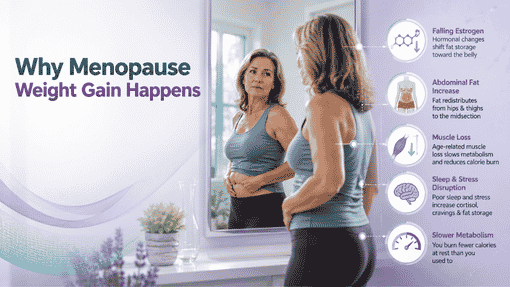
Why Menopause Weight Gain Happens
During and after menopause, falling oestrogen levels change where your body stores fat, shifting it from hips and thighs toward the belly. At the same time, age-related muscle loss slows your metabolism, so you burn fewer calories than before. Sleep disruption and stress, both common in midlife, add to the problem by affecting appetite and fat storage. The result is weight gain, especially around the middle, even when your eating has not changed. Knowing this lets you respond with the right strategy rather than blaming yourself.
The Strategy to Manage Menopause Weight
A few focused changes make the biggest difference:
- Strength training to rebuild muscle and counter the metabolic slowdown
- Higher protein, around 1.6 grams per kilogram, to protect muscle and curb hunger
- A moderate calorie deficit on whole foods, with less sugar and refined carbs
- Better sleep and stress management to control cortisol and cravings

Why Strength Training Is Non-Negotiable
The single most effective response to menopause weight gain is strength training. It rebuilds the muscle you are losing, which lifts your metabolism, and it protects bone density, which declines after menopause. It also improves how your body handles blood sugar and gives you a stronger, more toned shape. Cardio and walking help with calorie burn, but lifting addresses the core problem. Two to three strength sessions a week, at home or in a gym, can genuinely turn the tide on midlife weight gain.
Be Patient and Consistent
Managing menopause weight gain is about consistent habits, not quick fixes. Progress may feel slower than in your younger years, which is normal, so measure success over months. Focus on strength, protein, balanced eating, sleep, and stress care, and the belly fat responds steadily. Many women feel stronger and more energetic after menopause once they train properly. This stage of life calls for training smarter and being kind to yourself, not dieting harder and harder.
Get a Menopause-Friendly Plan
A plan built around your body, hormones, and routine during menopause, with the right strength training and nutrition, works far better than generic advice. A coach can build and adjust it as you progress. Book a free strategy call using the contact options below and manage menopause weight gain with a plan made for this stage of life.
The reassuring message is that this stage of life does not have to mean losing control of your body. With the right strength training, protein, and habits, the changes are manageable and often reversible, even if progress takes a little patience. Many women emerge from menopause fitter and more confident than before, simply because they adapted their approach to match their changing body rather than clinging to what used to work in their twenties and thirties.

FAQs
Q1. Why do women gain weight during menopause?
Falling oestrogen shifts fat toward the belly, muscle loss slows metabolism, and disrupted sleep and stress add to it, causing weight gain even without eating changes.
Q2. How do I lose menopause belly fat?
Combine strength training, higher protein, a moderate calorie deficit, and good sleep. Strength training is the most effective single change.
Q3. Is weight gain during menopause inevitable?
No. It is common and hormonal, but with the right strength training, nutrition, and habits, it can be managed and reversed.
Q4. What is the best exercise for menopause weight gain?
Strength training, because it rebuilds muscle, lifts metabolism, and protects bone density, supported by walking and moderate cardio.
Q5. Does protein help with menopause weight?
Yes. Around 1.6 grams per kilogram daily protects muscle and controls appetite, both important for managing menopause weight gain.
Ready to Start? Let’s Talk
- 📞 Call: +91-8544890999
- 💬 Instagram: https://www.instagram.com/trainedbyyvs/?hl=en
- 🌐 Website / Contact Form: TrainedByYVS.com